Tesla Model Y Trade-In vs Private Sale: Which Nets More in 2026
Trade-ins close faster but private sales can net $2,000–$4,000 more for Tesla Model Y sellers. The right choice depends on your timeline, state tax structure, and tolerance for buyer coordination.
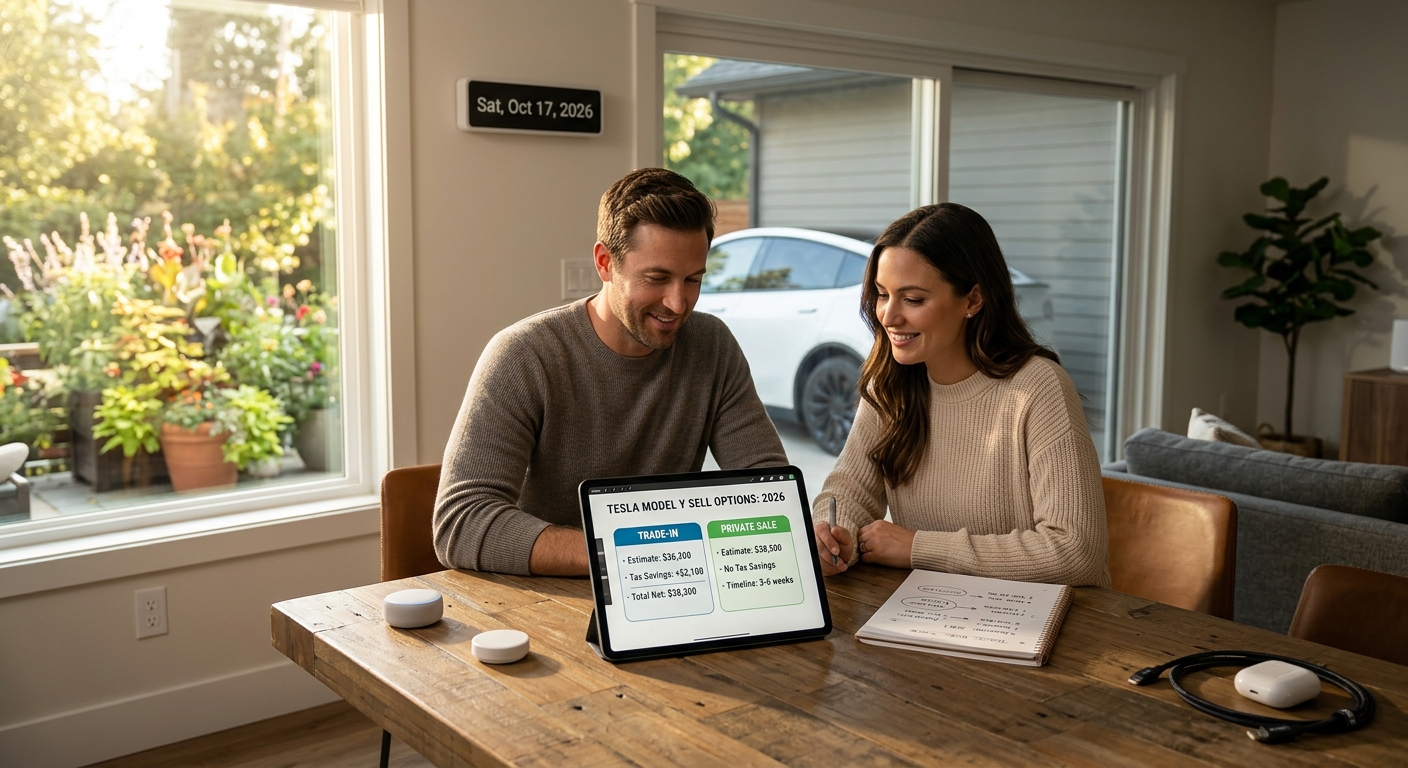
The Tesla Model Y sits at the center of the used EV market's liquidity test. Trade-ins deliver speed and simplicity. Private sales deliver higher gross proceeds but require coordination, patience, and direct buyer management. The gap between the two typically runs $2,000–$4,000 on a Model Y, though state tax credits and timing can shift the calculus.
Trade-In: Speed and Tax Offset
Dealerships buy Model Ys at wholesale rates because they're reselling into a fragmented market where pricing remains uneven. They discount for reconditioning costs, holding risk, and the reality that not every dealer has the infrastructure to move EVs quickly. The result is an offer that sits below private-market value but closes in hours, not weeks.
The clearest trade-in advantage is the sales tax offset. In states that allow trade-in credit against new-vehicle tax liability, you pay sales tax only on the difference between your new car's price and your trade-in value. If you're trading a $35,000 Model Y toward a $50,000 vehicle in a state with 7% sales tax, you save $2,450 in tax on the transaction. That offset narrows or eliminates the private-sale premium depending on your state's rate and the gap between offers.
Trade-ins also remove title transfer complexity, buyer financing coordination, and test-drive liability. The dealer handles paperwork, payoff if you're financing, and takes possession immediately. For sellers moving between vehicles on a tight timeline, that operational simplicity has measurable value even when the dollar figure sits lower than a private offer.
Private Sale: Higher Gross, More Coordination
Private sales consistently return higher gross proceeds because you're capturing the retail margin the dealer would otherwise take. The Model Y's popularity works in your favor here buyer demand remains strong, and the vehicle's software update continuity and Supercharger access make it easier to sell than many other EVs.
You'll need to manage buyer vetting, arrange test drives, coordinate payment, and handle title transfer yourself. In states requiring smog checks or safety inspections, you're responsible for passing those before sale. If your Model Y is financed, you'll coordinate payoff with your lender and ensure the title reaches the buyer cleanly. Each step adds time, and delays compound if your first buyer falls through.
Pricing discipline matters more in private sales. Overpricing by $1,500 can cost you weeks on the market, and the Model Y's pricing transparency driven by Tesla's own used inventory and high transaction volumes means buyers know the range. Underpricing leaves money on the table. The spread between trade and private typically runs $2,000–$4,000, but that assumes you price correctly and close within three weeks. Longer timelines erode the advantage as you carry insurance, registration, and opportunity cost.
Battery Health Transparency Closes Deals Faster
Both trade-in appraisals and private buyers now expect battery health data on used EVs. Dealerships discount Model Ys when they can't verify battery condition because they're pricing in reconditioning risk and potential buyer objections downstream. Private buyers ask directly about range retention and charging behavior, and vague answers stall negotiations.
Model Ys don't surface battery health in the driver interface the way some EVs do, so sellers rely on third-party reports or service center data. Having a recent battery health assessment whether from Tesla service or an independent EV evaluation tool removes a negotiation friction point and supports your asking price. Buyers pay more when uncertainty drops, and battery transparency is the clearest way to reduce it.
Plug's evaluation process includes battery health reporting as a standard component, which matters whether you're trading to a dealer or listing privately. Dealers use the data to justify higher trade offers because they can resell with confidence. Private buyers move faster when they see verified range retention rather than anecdotal claims.
State Tax Rules Shift the Math
Not every state allows trade-in tax credits, and the states that don't make private sales more competitive on a net-proceeds basis. California, for example, doesn't offer a trade-in tax offset, so the $2,000–$4,000 private-sale premium stands without erosion. In Texas, where trade-in credits apply, the tax savings can match or exceed the private-sale advantage depending on the vehicle's value and the state's 6.25% rate.
Run the calculation for your state before deciding. If you're in a trade-credit state and buying another vehicle immediately, the tax offset is real money that narrows the gap. If you're selling without buying, or you're in a state without trade credits, the private route becomes more compelling unless speed is the priority.
Timing and Market Liquidity
The used Model Y market moves faster than most EVs because transaction volumes are higher and buyer familiarity is broader. That liquidity benefits both trade and private paths, but it also means pricing adjusts quickly when Tesla changes new-vehicle incentives or drops prices. A $2,000 new-vehicle price cut can pull used values down within weeks, and sellers who wait risk watching their advantage disappear.
Trade-ins insulate you from that timing risk. The dealer's offer locks when you accept it, and market shifts after that point are their problem. Private sales expose you to market movement until you close, and a two-week listing period can span a pricing shift if Tesla adjusts inventory or incentives.
If you're selling in a strong local market with high EV adoption, private sales close faster and the timing risk drops. In regions where EV infrastructure is thinner and buyer demand is lighter, trade-ins become more attractive because dealer networks have the reach to move inventory across regions.
Which Path Fits Your Situation
Choose trade-in if you're buying another vehicle in a state with trade-in tax credits, need to close within days, or want to avoid buyer coordination entirely. The lower gross proceeds are offset by tax savings, speed, and operational simplicity. Dealers handle everything, and you walk away clean.
Choose private sale if you're in a state without trade credits, have three weeks to manage the process, and are comfortable vetting buyers and handling title work. The $2,000–$4,000 premium is real, but it requires pricing discipline, patience, and willingness to manage the transaction yourself.
Plug operates in both channels. We provide trade offers that reflect battery health data and current market liquidity, and we support private sellers with pricing guidance and buyer-facing transparency tools. The Model Y's market position makes it one of the easier EVs to move through either path, but the right choice depends on your timeline, tax situation, and tolerance for coordination. Get in touch with the Plug team to see both options with your specific vehicle and state tax structure in view.
Related Articles
 ev-resale-guides
Tesla Model Y Resale Value in 2026: What Sellers Can Expect
Model Y resale values stabilized in 2026 after two years of steep depreciation, with Long Range variants holding 55-60% of MSRP at three years and Performance trims retaining slightly more.
 ev-resale-guides
How Much Does Tesla Warranty Coverage Add to Your Model Y's Resale Value?
Remaining Tesla warranty coverage matters to buyers, but it doesn't translate to dollar-for-dollar resale premiums. Battery warranty length drives more pricing confidence than powertrain coverage alone.
 ev-resale-guides
Tesla Model Y Pricing After New Incentives: What Sellers Need to Know
Federal tax credits and state rebates reshape Model Y transaction prices, but used sellers compete with new inventory carrying up to $7,500 in buyer incentives. Understanding the spread determines realistic pricing.